Music Law in Plain English: Can Bankruptcy Stop Artists From Reclaiming Their Copyrights? Lil’ Joe Records, Inc. v. Mark Ross
One of the most artist-friendly features of U.S. copyright law is the termination right. In plain English, it allows creators to take back copyrights they signed away decades earlier. Congress introduced the rule because artists, especially young artists early in their careers, often lack the bargaining power to negotiate fair deals. The idea is simple: even if you signed away your rights in your twenties (so long as you did so after January 1, 1978), you likely can reclaim ownership of these rights 35-40 years later (as long as it was not a work-for-hire—something for another time).
It’s actually a pretty amazing deal. Good luck getting the house you sold 35 years ago back for free.
But what happens if an artist goes bankrupt before that second chance arrives? That was the question facing the Eleventh Circuit in Lil’ Joe Records, Inc. v. Mark Ross.
The Background: 2 Live Crew Wants Its Copyrights Back
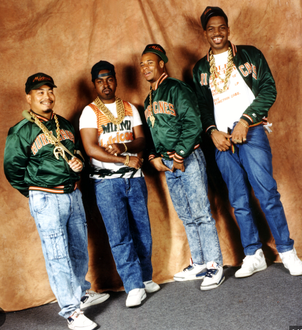
The case involved the legendary Miami rap group 2 Live Crew. Back in the late 1980s, the group’s members granted copyright interests in several albums to Luke Records. Foreshadowing what was to come, Luke Records later files for bankruptcy and sells those copyrights to Lil’ Joe Records. Fast forward a few more decades, and the Copyright Act’s termination provisions allowed the group’s members (or their heirs) to reclaim those rights.
In 2020, three of the four relevant ownership interests signed a notice attempting to terminate the original copyright grant. Ordinarily, that would have been enough. The Copyright Act requires a majority of the authors (or their successors) to act together when exercising termination rights.
The problem was that one of those three signatories, Mark Ross, had filed for Chapter 7 bankruptcy twenty years earlier.
The Legal Question
Ross argued that his termination right belonged to him personally.
There is some logic to that position. Copyright termination rights are unusual. The Copyright Act makes them largely inalienable. Authors generally cannot sign them away in advance, and Congress deliberately designed them as a personal protection for creators. So Ross’s argument was essentially: if termination rights are personal and cannot ordinarily be transferred, surely they cannot be swallowed by a bankruptcy estate either.
The Eleventh Circuit disagreed.
The Court’s Reasoning
The court focused on the Bankruptcy Code’s famously broad definition of property.
When someone files for bankruptcy, virtually all of their legal and equitable interests become part of the bankruptcy estate. Importantly, this includes contingent interests—rights that may not become exercisable until some future date. The court viewed Ross’s termination right as exactly that: a contingent property interest. Although Ross could not exercise the right immediately when he filed for bankruptcy in 2000, he still possessed a future legal claim that might eventually allow him to recapture valuable copyrights. That was enough.
The court also rejected the argument that copyright law’s anti-transfer provisions changed the analysis. Bankruptcy law specifically provides that interests can enter the bankruptcy estate even when other laws restrict their transfer.
In other words, Congress may have wanted termination rights to be difficult to sell, but that did not stop them from becoming bankruptcy assets.
The Fatal Problem
The story might have ended differently if Ross’s termination interest had been properly dealt with during the bankruptcy. But it wasn’t: nobody scheduled it. Nobody administered it. Nobody even mentioned it. Under bankruptcy law, unscheduled assets generally remain property of the bankruptcy estate even after the bankruptcy case closes.
As a result, when Ross signed the termination notice in 2020, the court concluded that he no longer controlled the interest he was trying to exercise. Legally speaking, the interest still belonged to the bankruptcy estate.
That meant his signature didn’t count. Without Ross, only two of the four relevant ownership interests had validly joined the termination notice. Because the Copyright Act requires a majority, the attempted termination failed.
Lil’ Joe Records therefore retained ownership of the copyrights.
Why This Matters
The decision is significant because it appears to be the first federal appellate case directly addressing the relationship between copyright termination rights and bankruptcy law. For artists, the lesson is surprisingly practical: old bankruptcies can have consequences long after everyone involved has forgotten about them. For their lawyers, the case is a reminder that copyright’s strongly worded protections are not always as absolute as they seem when they collide with other federal statutes.
The Copyright Act wanted to give artists a second chance. The Bankruptcy Code wanted to gather every possible asset into the estate. In this case, bankruptcy won.