Even before the recent proliferation of generative AI music tools, something about the Western conception of copyright had always struck me as sitting at odds with the classical ideals of human expression I cultivated in innumerable musicology lectures. What follows is a preliminary attempt to tease out some of the ways in which copyright is, in fact, arbitrary in its characterization of the musical work, with some concluding musings on what ought to be protectable in the age of AI-assisted music production.
A Glance Backward
Music, by its nature, resists definition and regulation. Every known human society has produced some form of it—a universality that speaks to the deeply subjective values underpinning different musical traditions. Traditional African drum circles are defined by participation, collaboration, and improvisation, while European Romanticism celebrated the composer’s singular genius, conceiving of the musical work as an ideal that performers could only ever strive to approximate. This is the doctrine of Werktreue, which emerged alongside modern music copyright and has remained at its heart ever since.
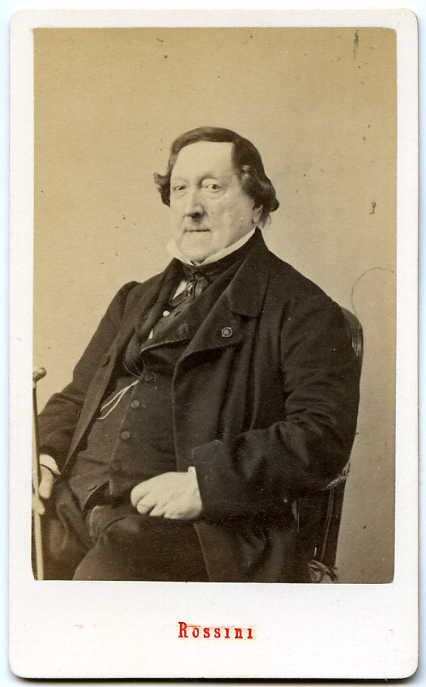
But even within the narrow tradition of European classical music itself, the degree to which a composition was ever truly “fixed” has varied considerably. From the sixteenth century onwards, insertion arias—songs extraneous to the opera, slotted into performances in place of the original—became common practice. Operas were often composed with this in mind: Rossini’s The Barber of Seville includes so-called “lesson scenes” purpose-built for such substitutions, inviting singers to contest not only the sonority but the very meaning of the work. Some musicologists go so far as to argue that singers, not composers, held primacy in determining what an opera actually meant. When the boundaries of authorship are so thoroughly blurred, the logic of Werktreue does not cleanly apply.
The Assumption of Copyright
And yet, as we have seen, US copyright aligns squarely with the Werktreue in its characterization of the “musical work.” Protection requires both originality and fixation—and implicit in that latter term is the assumption that a musical text is fully settled. How else could it be fixed? Yet as the Rossini example illustrates, the notion of a fully settled musical text is far from universally viable, let alone consistent within the Western Art Music tradition itself.
The Unsettled Text: Performer as Composer
The average listener in the US is more accustomed to unfixed elements in music than they might realize, be it a classical cadenza, or the solos improvised in genres including jazz and rock. Some composers have designed this sort of uncertainty into the structural form of their work. Karlheinz Stockhausen’s Klavierstück XI is a celebrated case in point. To perform the piece, the pianist begins with any fragment on the single large score sheet, moves on to any other section of their choosing, and concludes when a section is reached for the third time. Performance instructions for tempo and dynamics appear at the close of each section—applying not to that section, but to whichever the performer turns to next. The result is that any given section can sound entirely different depending on what preceded it, rendering each performance genuinely distinct.

An even more extreme case is Morton Feldman’s Intermission 6. The score offers only the most cursory instructions, with no guidance on where to begin or when to end.

Were I to transcribe and publish my own realization of the piece, Feldman’s fragments are so brief and his instructions so sparse that it is difficult to imagine him successfully bringing an infringement claim.
These examples also complicate the role of the composer. Music is, at its core, an art form experienced in the moment of performance—and in both cases, that experience is more strongly shaped by the performer, who is making the structural decisions about which notes are actually heard, than by the composer’s framework. There may be a “fixed” score, but it strains credibility to describe these as settled texts when performances can sound so starkly different from one another.
Technology as Composer
In something of a foreshadowing of the current moment, consider John Cage and Lejaren Hiller’s HPSCHD, which premiered in 1969. Seven harpsichords play over a chaotic bed of fifty-two sound-generating machines (I should warn you, this is a difficult listen). To generate the harpsichord parts, Hiller devised a number-randomizing algorithm drawn from the ancient Chinese text the I Ching, which was then used to analyze the melodic content of existing classical works—Mozart, Beethoven, and the like—before producing “new” material from that analysis. Although Hiller wrote the code, the extent to which the resulting melodies are copyrightable is genuinely contentious: they were not created by a person, nor was the algorithm itself proprietary to him. One could argue, then, that HPSCHD lacks the requisite modicum of creativity required to qualify for copyright protection at all.
Nevertheless, for all these legal ambiguities, few of us would hesitate to recognize Klavierstück XI, Intermission 6, and HPSCHD as genuinely singular works of art. That intuition, I think, exposes something telling about the limits of copyright as a framework. When the law cannot keep pace with the art, it may be worth asking whether the law’s conception of the musical work was ever quite as universal as it presumed—particularly when the works it struggles to accommodate emerge directly from the very Western Art Music tradition that gave copyright its shape.
The Journey, Not the Destination
We can push these examples further by inverting the analysis. Alan L. Durham (2002) offers a useful thought experiment exploring how the same-sounding performance can carry vastly different degrees of authorship depending on the compositional process behind it. Mozart, rather wonderfully, devised a dice game in which the roll of the dice determines the order of precomposed musical segments—and this game is still playable today via a website. Durham asks: if you sit down at that website and produce a waltz, who exactly is the author? You, for clicking the buttons? The person who built and maintains the site? Mozart, for designing the system in the first place? The point is that authorship is being contested on the grounds of process rather than output—and a settled text, it turns out, may tell us rather less about the creative act behind it than copyright assumes.
Developing a Theory of Authorship
The problem of defining originality and fixity within the Western art music tradition expands outward with more serious consequences. Genres such as jazz, rooted in improvisation and oral tradition, are structurally disfavoured by copyright—a direct result of the subjective definitions and precedents governing what qualifies as a protectable musical work. Some genres, in short, are simply better protected than others. I am not, admittedly, in a position to rewrite US copyright law—but I will nonetheless propose a principle of authorship that might serve as a useful guideline for what ought to be protected, particularly as new technologies continue to obscure the question of who, or what, is really doing the creating.
Returning to the Mozart dice game, Durham (2002) touches on the idea of “creative control” in determining authorship of works that incorporate aleatoric elements—noting that it can be difficult to separate a system from what the system produces, especially when the author’s creativity resides in the former rather than the latter. Durham raises this only in passing, but I would argue that creative control is considerably more relevant now than when he was writing. Applying it to our earlier examples, a robust creative control principle affirms Stockhausen, Feldman, Cage, and Hiller as the authors of their respective works—the freedom afforded to performers in Klavierstück XI and Intermission 6, and the machine-generated harpsichord parts in HPSCHD, are all held within a framework of unmistakably intentional creative decision-making. In such a context, the absence of instruction itself becomes meaningful. Jazz offers perhaps the most intuitive illustration of this: the improvised solo is, for many players and listeners alike, the very heart of the genre. The soloist is in spontaneous dialogue with the chord changes, their fellow musicians, their instrument, and the long lineage of players who came before them. This is creative control in its most vivid form—and with it, legitimate authorship.
Putting AI to the Test
Let us put this to the test with AI. If the goal of US copyright law is to secure a fair return for an author’s creative labor and to stimulate artistic creativity for the general public good (which it is, per Twentieth Century Music Corp. v. Aiken, 1975), then we must consider whether art made with AI tools deserves protection. Creative control offers a workable lens here: the more the use of AI constitutes a smaller element within a broader human creative process, the more viable a claim of authorship becomes. Radiohead’s Fitter Happier is instructive: the deployment of an automated text-to-speech voice reciting mundane habits over a string ensemble is, somehow, profoundly affecting. AI-generated music could plausibly serve a similar expressive function, particularly where a human composer is working over or around it, as in the Radiohead example, and a sufficient creative process frames its use. This is only one possibility, of course. But what the discussion as a whole makes clear is that as musical technologies and practices evolve, the legal understanding of the musical work and its authorship must evolve with them—or we risk applying a nineteenth-century European ideology to the creative endeavors of twenty-first century musicians across the world.